What is Marginal Cost ? Formula, Example and Graph

mc equation

That’s why photons don’t have mass — but they do have momentum, so they still get energy, according to the University of Illinois at Urbana-Champaign Department of Physics. Reportedly, Einstein felt disappointed that his theory didn’t have as big a response at the beginning. However, by 1906, European physicists traveled to Switzerland to discuss the equation with him.

  • The updated numerical values that are summarized in the following table are all expressed in the appropriate units and, therefore, can be utilized to solve the given problem.
  • For example, the marginal cost of producing an automobile will include the costs of labor and parts needed for the additional automobile but not the fixed cost of the factory building, which does not change with output.
  • Incidentally, increasing the internal energy of a system does not necessarily increase its temperature.
  • By calculating the marginal cost (we’ll describe how to do that below), you can make a decision about whether to increase production.
  • The prodigious amounts of energy required to cause particles to literally pop out of thin air in this way is an indication of just how much energy is encapsulated within mass.
  • Alternatively, an individual may be a smoker or alcoholic and impose costs on others.

Energy

  • So, the one with the lowest specific heat would have the highest temperature.
  • Productive processes that result in pollution or other environmental waste are textbook examples of production that creates negative externalities.
  • The assumption of a smooth, continuous cost curve doesn’t often reflect real-world conditions where costs can change in steps rather than gradually.
  • A large body of water, such as a lake, requires a large amount of heat to increase its temperature appreciably.
  • But, if you are the only firm to increase the price, demand will be elastic.

Marginal cost analysis also provides valuable insights for pricing strategies and helps businesses respond effectively to market changes. Furthermore, it can enable companies to identify inefficiencies in their production processes and make data-driven decisions about expansion or contraction. Thus, at $230 to produce—more than the current average cost mc equation of $200—the company would have to sell phones for at least $230 each, or it would lose money on every additional unit produced. Even if the current market price is above $230, the company must consider whether the increased supply might force it to lower prices to sell all produced units.

Marginal Cost: Meaning, Formula, and Examples

mc equation

This Leibniz introduces an alternative method using the firm’s marginal revenue and marginal cost. We calculate the gravitational potential energy (Mgh) that the entire truck loses in its descent, Accounts Receivable Outsourcing equate it to the increase in the brakes’ internal energy, and then find the temperature increase produced in the brake material alone. We have seen in previous chapters that energy is one of the fundamental concepts of physics.

How to Calculate Marginal Cost?

  • Workers develop expertise and routines, machinery operates at more efficient levels, and fixed costs are spread across more units.
  • When marginal cost is defined as the change in the cost of production by producing an additional unit of output, the marginal revenue states the change in the total revenue by selling an additional unit of output.
  • So, we can now compare the specific heat capacity of a substance on a per gram bases.
  • On the right side of the page, the short-run marginal cost forms a U-shape, with quantity on the x-axis and cost per unit on the y-axis.

The speed of light squared is a colossal number, illustrating just how much energy there is in even tiny amounts of matter. Externalities are costs (or benefits) that are not borne by the parties to the economic transaction. A producer may, for example, pollute the environment, and others may bear those costs.

mc equation

A manufacturing company has a current cost of production of 1000 pens at $1,00,000, and its future output expectation is 2000 pens with a future cost of production of $1,25,000. Johnson Tires, a public company, consistently manufactures 10,000 units of truck tires each year, incurring production costs of $5 million. However, one year later, the market demand for tires was significantly higher, requiring the additional production of units, which prompted what are retained earnings management to purchase more raw materials and spare parts, as well as to hire more manpower.

mc equation

In short, the change in total cost arises when the quantity produced changes by one unit. Mathematically, it is expressed as a derivative of the total cost concerning quantity. Marginal cost represents the incremental costs incurred when producing additional units of a good or service. It is calculated by taking the total change in the cost of producing more goods and dividing that by the change in the number of goods produced. For example, while a monopoly has an MC curve, it does not have a supply curve. In a perfectly competitive market, a supply curve shows the quantity a seller is willing and able to supply at each price – for each price, there is a unique quantity that would be supplied.

Accounting Basics: Assets, Liabilities, Equity, Revenue, and Expenses

is a liability an expense

These obligations are eventually settled through the transfer of cash or other assets to the other party. Liabilities are obligations to other parties, such as payable to suppliers, loans from banks, bonds issued, etc. They are also classified into current (short-term) and non-current (long-term) liabilities. Current assets are short-term in nature, such as cash and inventories. Non-current assets are long-term; for example, land, building, and equipment. This is because it is not a cost incurred as a result of the operations or production of the company.

  • A contingent liability is an obligation that might have to be paid in the future but there are still unresolved matters that make it only a possibility, not a certainty.
  • Current liabilities are due within a year and include costs such as payroll, accounts payable and other short-term obligations.
  • Expenses, conversely, are found on the income statement, where they contribute to the calculation of net income over a period.
  • At the same time, the company needs to record salary payable as it is not yet made payment to the employee.
  • Use payroll software to generate a payroll-liability balance report each time you process payroll.

Understanding Financial Classifications

is a liability an expense

The decision of Current Asset or Negative Current Liability depends on the output tax that is charged. In case the output tax is equivalent to the input tax paid, then it will be automatically written off. Because of additional work of accruing expenses, this method of accounting is more time-consuming and demanding for staff to https://antiguajuriquilla.com/bookkeeping/top-5-bookkeeping-software-solutions-a-2/ prepare.

is a liability an expense

Key Differences Between Liabilities and Expenses

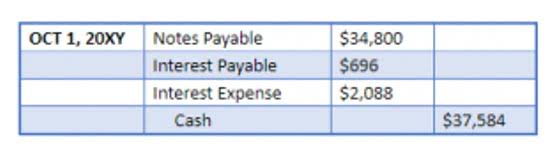
The company is then liable to pay the collected sales taxes to the government. In this case, the initial collection of sales taxes creates a credit to the sales taxes payable account, and a debit to the cash account. When the sales taxes are due for payment, the company pays cash to the government, which eliminates its sales tax liability. Accrued rent is another liability account under ASC 840 that is derived from a difference in the timing of cash payment and expense recognition. If cash payments are not made at the same time as expense is recognized, the obligation to pay the amounts CARES Act that have been expensed would be accrued. For a full explanation with journal entries, read our blog, Accrued Rent Accounting under ASC 842 Explained.

Liabilities vs. Assets

is a liability an expense

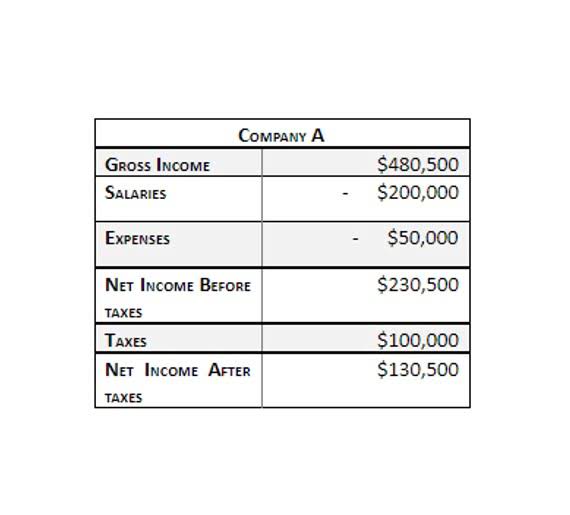
A contingent liability is an obligation that might have to be paid in the future but there are still unresolved matters that make it only a possibility, not a certainty. Lawsuits and the threat of lawsuits are the most common contingent liabilities but unused gift cards, product warranties, and recalls also fit into this category. This resulting net income figure directly impacts the balance sheet. It flows into the statement of retained earnings, and the ending balance of retained earnings is then reported within the shareholders’ equity section of the balance sheet.

Example of VAT

is a liability an expense

For the past 52 years, Harold Averkamp (CPA, MBA) hasworked as an accounting supervisor, manager, consultant, university instructor, and innovator in teaching accounting online. He is the sole author of all the materials on AccountingCoach.com. For the past 52 years, Harold Averkamp (CPA, MBA) has worked as an accounting supervisor, manager, consultant, university instructor, and innovator in teaching accounting online.

  • Inaccurately or incorrectly reporting them can impact your company’s financial well-being and decision-making.
  • To earn revenue, businesses incur costs, which are for running regular business operations.
  • When a company accrues (accumulates) expenses, its portion of unpaid bills also accumulates.
  • An accounting platform can help simplify and streamline the workflow via automation, saving you both time and money throughout the process.
  • Employers should maintain detailed payroll liability accounts in the general ledger, separately tracking amounts owed for payroll taxes, retirement contributions, and insurance premiums.
  • These obligations arise from past transactions and require a future outflow of economic benefits, such as cash, goods, or services.

What Are You Primarily Doing When You Reconcile Your Checking Account?

You should record a contingent liability if it is probable that a loss will occur, and you can reasonably estimate the amount of the loss. If a contingent liability is only possible, or if the amount cannot be estimated, then it is (at most) only noted in the disclosures that accompany the financial statements. Examples of contingent liabilities are the outcome of a lawsuit, a government investigation, or the threat of expropriation. Purchases are debited in the profit and loss account because they is a liability an expense are an expense, and they increase the assets of the company. In the same manner, VAT input can either be a Current Asset or a Negative Current Liability.

Importance of Liabilities

A liability is classified as a current liability if it is expected to be settled within one year. Accounts payable, accrued liabilities, and taxes payable are usually classified as current liabilities. If a portion of a long-term debt is payable within the next year, that portion is classified as a current liability. Accrued expenses are prevalent during the end of an accounting period. A company often attempts to book as many actual invoices as it can during an accounting period before closing its accounts payable (AP) ledger.

What Are Proprietary Funds in Government Accounting?

  • Understanding how insurance fits into personal or business financial pictures can be confusing.
  • These are obligations or some sort of debt that a business must pay in the future.
  • Commonly, it will be paid within 12 months from the year-end of financial statements, and it is not generally more than that.
  • This resulting net income figure directly impacts the balance sheet.
  • Worker compensation insurance costs (also referred to as worker comp) should appear on the income statement and also on the balance sheet.

The AT&T example has a relatively high debt level under current liabilities. Other line items like accounts payable (AP) and various future liabilities like payroll taxes will be higher current debt obligations for smaller companies. Current liabilities are obligations that are expected to be settled within one year or the operating cycle of a business, whichever is longer. They include accounts payable, accrued expenses, short-term loans, and other similar obligations. Long-term liabilities, on the other hand, are obligations that extend beyond one year, such as long-term loans, bonds payable, and lease obligations.